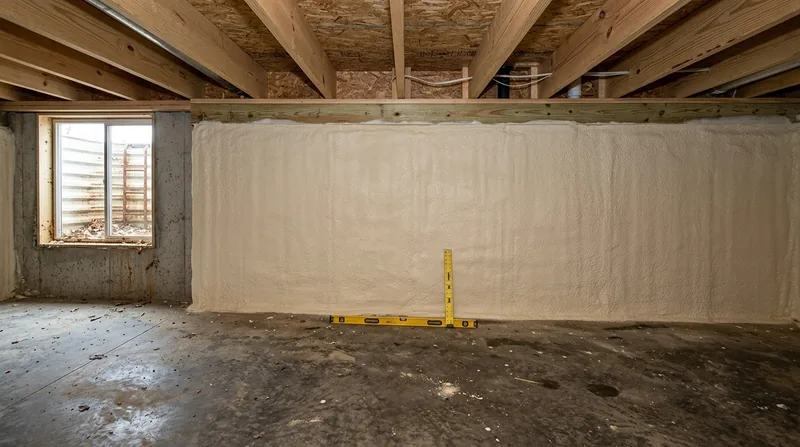




Closed cell spray foam insulation in Lafayette is the high-performance choice for homeowners and builders facing the region's extreme seasonal swings. North-central Indiana winters drop below zero and build ice dams on roof edges; summers climb into the nineties and drive humidity deep into attics and crawl spaces. Closed cell foam stops both: it seals air leaks, resists vapor drive from either direction, and delivers an R-value of 6 to 7 per inch, nearly double that of open cell. Whether you own a 1920s Victorian on Ninth Street Hill with balloon-framed walls, a mid-century ranch in Hills and Dales, or a post-frame farm building out past Battle Ground, closed cell foam addresses the moisture and temperature extremes that make Lafayette's building stock sweat or freeze. We've been installing spray foam across Greater Lafayette since 2012, and we know exactly where leaks form and why.
Why Closed Cell Spray Foam Matters in Lafayette's Climate and Building Stock
Lafayette sits on vented crawl spaces, basements, and slabs depending on home age and lot elevation. Above them, attics bake in July and drop below zero in January, creating the perfect conditions for ice dams, condensation, and air leaks that drive heating and cooling costs skyward. Closed cell foam does three things that matter here: it blocks air infiltration at the source, it resists moisture from both warm indoor air in winter and humid outdoor air in summer, and it adds structural rigidity to roof decks and rim joists that have settled over decades. The result is lower utility bills, fewer ice dams, and a basement or crawl space that stays dry year-round.
- Closed cell foam seals every crack and void, stopping the air leaks that account for 30 to 40 percent of heating and cooling loss in older homes.
- Its vapor-resistant properties work in both directions, protecting against moisture drive when cold outside air meets warm indoor space in winter, and when humid summer air tries to penetrate from outside.
- At 6 to 7 R per inch, closed cell delivers twice the insulation value of open cell in the same thickness, critical for attics and rim joists where space is tight.
- It adds structural support to sagging roof decks, rim joists, and band joists common in Lafayette's 1920s to 1960s housing stock.
- Closed cell foam is the right choice for metal buildings and pole barns where condensation control on steel is the primary failure mode.
These performance traits make closed cell the premium option for Lafayette homeowners who want to stop the seasonal temperature and moisture swings that drive energy waste and building damage.
Key info: Lafayette and West Lafayette experience ice dam formation on sloped roofs every January and February because attic heat melts snow at the eaves, refreezing at the overhang where no insulation reaches. Closed cell foam sprayed under the roof deck stops that heat loss entirely, preventing ice dams before they form. Homeowners in Centennial, Highland Park, and Perrin report the biggest impact in older Victorians and foursquares with uninsulated attic cavities.
How We Install Closed Cell Spray Foam Insulation in Lafayette Homes and Buildings
Our process starts with a site visit to understand your building's layout, moisture history, and code requirements. We identify where air leaks and thermal loss are happening, measure the spaces that need foam, and confirm that the substrate is clean, dry, and ready to receive foam. We then spray closed cell polyurethane in controlled passes, maintaining the manufacturer's ratio and drum temperature, and we run mechanical ventilation during the cure period to manage off-gassing. Once cured, we install thermal and ignition barriers as required by code, and we provide written documentation of R-value and thickness at every location.
- We perform a free written estimate on site, measuring the space and specifying the R-value and thickness you'll receive.
- We verify that the substrate is dry before we spray; if moisture is present, we address it or we walk away rather than trap it under foam.
- We spray in multiple thin passes to achieve the desired thickness, ensuring even coverage and proper curing between passes.
- We maintain mechanical ventilation and a re-entry window of 24 to 48 hours, and we provide clear guidance on when the space is safe to occupy.
- We install thermal barriers and ignition barriers as required by the Lafayette or West Lafayette building code at your address.
- We document every job with photos, R-value verification, and a workmanship warranty on the installation itself.
This structured approach means you know exactly what you're getting, when it will be done, and how long before you can use the space again. We also offer insulation removal if your attic or crawl space has failed fiberglass or old cellulose that needs to come out before we spray.
Example: A 1950s ranch in Dayton with an unvented attic over a finished second floor had condensation pooling on the roof sheathing every winter. We removed the failed fiberglass, sealed the rim joist and band joist with 2 inches of closed cell foam, sprayed 5.5 inches under the roof deck to achieve R-40, and installed a thermal barrier. The homeowner reported zero condensation the following winter and lower heating bills immediately.
Closed Cell Spray Foam Methods and Applications
| Application | Description | Best for |
|---|---|---|
| Sealed Attic Decks | Closed cell foam sprayed on the underside of roof sheathing to create an unvented, conditioned attic space. | Homes with bonus rooms, finished attics, or ice dam problems. Stops condensation and heat loss on sloped roofs. |
| Crawl Spaces and Rim Joists | 2 to 3 inches of closed cell foam sprayed on band joists, rim joists, and crawl space walls to seal air leaks and block moisture. | Vented crawl spaces with cold floors, damp basements, and homes where crawl space conditioning is the goal. |
| Wall Cavity and Injection Foam | Closed cell foam injected into existing wall cavities through small holes, filling empty balloon-frame or cavity walls without demolition. | Pre-1980 homes with empty cavities, retrofit insulation of exterior walls, and historic homes where interior finishes must stay intact. |
| Metal Buildings and Pole Barns | Closed cell foam sprayed under metal roof panels and on steel walls to control condensation and provide thermal break. | Agricultural buildings, equipment storage, and barndominiums where condensation on steel causes rust and moisture damage. |
| Garage Ceilings | 3 to 4 inches of closed cell foam sprayed on the underside of garage roof or ceiling to reduce heat loss and sound. | Attached garages in cold climates, bonus rooms over garages, and homeowners seeking noise dampening and air sealing. |
| Commercial Shells and New Construction | Closed cell foam applied to roof decks, walls, and mechanical chases in new buildings and industrial retrofits to meet energy code. | New construction, commercial tenant improvements, industrial parks, and Purdue Research Park projects requiring energy code compliance. |
Each application is selected based on the building's use, the moisture and temperature conditions it faces, and the energy code that applies at your address. Closed cell is the choice when vapor resistance, high R-value per inch, or structural support is the priority.
Closed Cell Spray Foam Insulation Cost in Lafayette: What to Expect
Closed cell spray foam typically costs from $1.20 to $1.60 per board foot, depending on the thickness you need, the size and accessibility of the space, and any site preparation required. A typical attic sealed under the roof deck might cost $3,000 to $6,000; a rim joist and crawl space treatment might run $2,000 to $4,000. The largest variable is the R-value you're targeting: R-30 under a roof deck requires less foam than R-50, and that difference shows directly in your bill.
Factors that move the price up include difficult access (tight crawl spaces, high attics, or spaces requiring scaffolding), the need to remove and haul away failed insulation first, the complexity of the substrate (multiple levels, many penetrations, or areas that need moisture repair before foaming), and the distance from our shop. We charge no mileage fee within Lafayette and surrounding areas; travel is included in the estimate.
The best way to know what your job will cost is to contact us for a free written estimate. We measure the space, specify the R-value and thickness, and give you a firm number with no surprises. We also encourage you to get 2 or 3 estimates from different contractors so you can compare not just price but also the scope, the R-value promised, and the warranty offered. A price far below market with no written specifications is a red flag.
For a detailed breakdown of pricing by application and size, see our full pricing page.
What to Look for When Hiring a Closed Cell Spray Foam Contractor Near Lafayette
Choosing the right spray foam contractor is as important as choosing the product itself. The market includes rig-and-run crews from out of state who spray a job in an afternoon and disappear when the smell won't go away, national franchises with high overhead, and local independents who live in the community and stand behind their work. Here's how to evaluate any contractor, including us.
- Ask for a written estimate that specifies the R-value, thickness in inches, and the total square footage or board feet being sprayed at every location.
- Verify that the contractor is fully insured and ask to see a certificate of insurance naming you as an additional insured for the duration of the work.
- Ask whether the contractor pulls permits and who is responsible for permitting at your address; permitting requirements vary between Lafayette, West Lafayette, and surrounding towns, so always defer to your local building department.
- Request references from recent jobs in Lafayette or nearby, and call at least two to ask about the quality of the installation, the cleanliness of the job site, and whether issues arose after completion.
- Confirm the warranty: honest contractors offer a one- to three-year workmanship warranty on the installation itself, not a lifetime guarantee on the product.
- Ask how the contractor manages off-gassing and re-entry: mechanical ventilation during cure and a 24 to 48 hour re-entry window are the standard and the safe approach.
- Choose an estimate based on a site visit and measured areas, with the foam type, installed thickness and R-value written down for each area.
A local contractor with a local address, local insurance, and a track record in Lafayette's building stock is your best protection. We're happy to answer any of these questions and to provide references, insurance details, and a detailed written estimate at no cost. Call us at (765) 441-6823 or request a free estimate online.
Closed Cell Spray Foam Insulation in Lafayette: Pricing Guide
| Service | Price | Details |
|---|---|---|
| Sealed Attic Deck (R-40 to R-50) | Starting at $1.20/board ft | Closed cell foam under roof sheathing, typical 1,200 to 2,000 sq ft attic, includes thermal barrier per code |
| Rim Joist and Crawl Space (2 to 3 inches) | Starting at $1.35/board ft | Band joist and rim joist sealing, smaller square footage, higher labor per board foot due to detail work |
| Wall Cavity and Injection Foam Retrofit | Starting at $1.50/board ft | Existing wall cavities in pre-1980 homes, drilling and injection labor, access difficulty and wall length drive cost variation |
| Metal Building or Pole Barn Roof and Walls | Starting at $1.30/board ft | Steel condensation control, large square footage, access via lift or scaffolding, total job cost typically higher due to building size |
| Removal and Replacement (Old Insulation Plus Closed Cell) | On estimate | Removal labor, haul-away, and new closed cell foam; total cost depends on type and volume of failed insulation being removed |
| Estimate and Travel | Free | No charge for site visit, written estimate, or travel within Lafayette and surrounding service areas |
Indicative pricing, the exact cost depends on square footage, finish, and site access. Free personalized estimate within 24h at (765) 441-6823.


