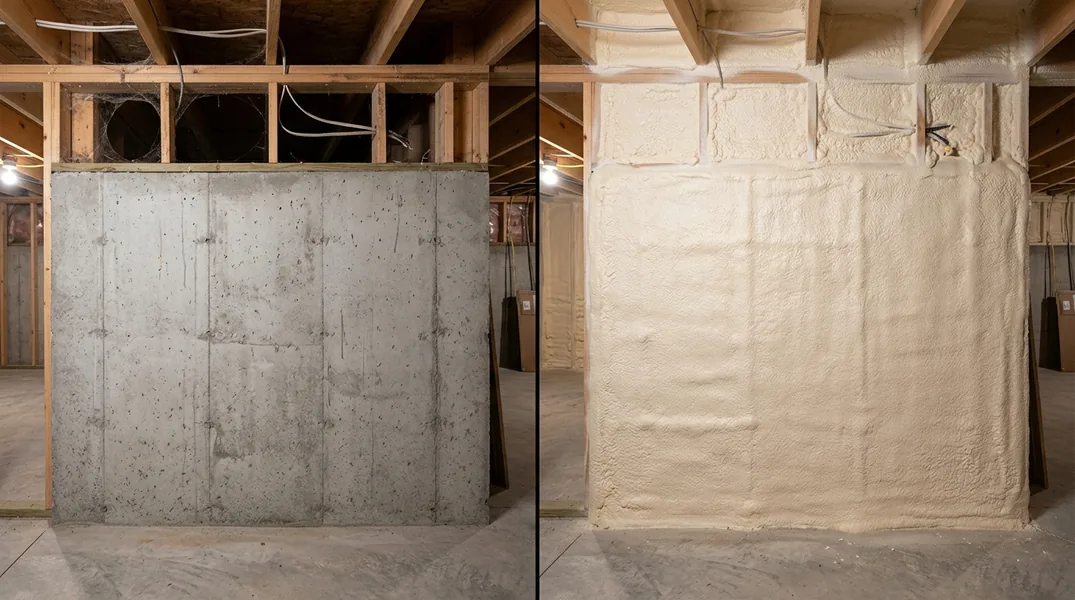
Understanding R-Value Requirements in Indiana
If you own a home in Lafayette, understanding your state's insulation requirements is the first step toward making an informed decision about upgrading your home's energy efficiency. Indiana follows the International Energy Conservation Code (IECC), which sets minimum R-value requirements based on climate zone and building component. Lafayette is located in IECC Climate Zone 5A, which means your attic insulation should meet specific thermal resistance standards to comply with current residential building codes.
The Indiana residential code requires attic insulation to achieve an R-value of R-49 to R-60 in most cases, depending on the specific code year and local amendments. This may sound technical, but it simply means your insulation needs to resist heat transfer effectively enough to meet energy conservation standards. The R-value is a measure of thermal resistance per inch of material thickness. Different insulation materials achieve this differently, which is why choosing the right type of insulation for your home matters significantly for both compliance and long-term performance.
Spray Foam Insulation R Value Per Inch: How Much Coverage Do You Need?
Attic Spray Foam Insulation offers superior R-value performance compared to traditional fiberglass batts or blown-in cellulose. Closed cell spray foam delivers approximately R-6 to R-7 per inch, while open cell spray foam provides about R-3.5 to R-3.8 per inch. This means that to achieve Indiana's R-49 requirement, you would need roughly 7 to 8 inches of closed cell foam or 13 to 14 inches of open cell foam. For the higher R-60 standard, closed cell would require approximately 9 to 10 inches, while open cell would need around 16 to 17 inches.
The choice between Closed Cell Spray Foam Insulation and Open Cell Spray Foam Insulation depends on your budget, attic space, and specific needs. Closed cell foam is denser and provides better air sealing, moisture resistance, and structural support, making it ideal for attics in climates with temperature fluctuations. Open cell foam is more affordable and offers excellent sound dampening properties, though it requires a vapor barrier in certain climates. Both options significantly outperform traditional insulation materials in terms of air sealing, which prevents energy loss through gaps and cracks that plague conventional insulation.
When determining how thick your spray foam should be, a professional assessment is essential. The thickness needed depends on your attic's current condition, ventilation requirements, and whether you're achieving compliance with code or pursuing optimal energy efficiency. Many homeowners find that investing in slightly more insulation than the minimum code requirement pays dividends in reduced heating and cooling costs over time.
Federal Insulation Tax Credit: What Changed for 2026
For several years, the federal Energy Efficient Home Improvement Credit (section 25C) let homeowners claim part of the cost of qualifying insulation. That insulation tax credit ended for improvements placed in service after December 31, 2025, so Attic Spray Foam Insulation and other insulation work completed in 2026 no longer qualifies for it. Older articles and contractor flyers still mention it, which is why it is worth checking the date on anything you read about federal incentives.
What still matters for your project is the paperwork. Lafayette Spray Foam Insulation gives you a written record of the work: the foam type, the installed thickness and the resulting R-value. That record is what a utility rebate application usually asks for, and it is useful when you sell the house. For any tax question about your own situation, ask a tax professional.
State and Local Insulation Rebates Available to Lafayette Homeowners
Indiana homeowners may have access to insulation rebates through utility companies and state energy programs. Many electric and natural gas providers offer rebate programs designed to encourage residential energy efficiency improvements. The availability, terms and amount of these rebates vary depending on your specific utility provider and whether you live within their service territory.
To find available rebates in your area, contact your local electric and gas providers directly or visit their websites to review their energy efficiency programs. Some utilities offer instant rebates at the point of purchase, while others provide mail-in rebates after installation is complete. Additionally, Indiana's Department of Energy Development may offer information about state-level incentive programs. When you contact Lafayette Spray Foam Insulation at (765) 441-6823, we can give you the written details of the work (foam type, thickness, R-value) that a rebate application usually asks for.
Programs change by utility and program year, so check the current terms with your provider before you schedule the job.
Attic Spray Foam Insulation Cost in Lafayette: What to Budget
The cost of spray foam insulation varies based on several factors, including the type of foam you choose, the square footage of your attic, current insulation conditions, and accessibility. Closed cell spray foam typically costs more per square foot than open cell foam, but it delivers higher R-value per inch and superior moisture resistance. For a typical attic in Lafayette, homeowners should expect to invest between $1.50 to $3.00 per square foot for closed cell foam installation, or $0.75 to $1.50 per square foot for open cell foam, depending on thickness and complexity.
To understand the actual investment required for your specific home, obtaining a free estimate from a qualified contractor is essential. Lafayette Spray Foam Insulation provides detailed assessments of your attic's current condition, calculates the exact thickness needed to meet code requirements, and provides transparent pricing with no hidden fees. The estimate lists the foam type, thickness and R-value for each area, which is the information a utility rebate application usually asks for.
Remember that the lowest price isn't always the best value. Quality installation is critical to ensuring your spray foam performs as intended. Improper application can result in gaps, inconsistent coverage, and reduced effectiveness. Choosing an experienced, reputable contractor ensures your insulation investment delivers the energy savings and comfort improvements you expect for years to come.
Why Professional Installation Matters for Code Compliance
Installing spray foam insulation is not a typical DIY project. Professional installation ensures that your insulation meets Indiana's residential code requirements and performs optimally throughout its lifespan. Improper installation can result in code violations and reduced energy efficiency. Professional installers have the training, equipment, and experience to apply foam at the correct thickness, ensure proper air sealing, and address ventilation requirements that vary depending on your attic configuration.
When you work with Lafayette Spray Foam Insulation, you're working with professionals who understand Indiana's specific code requirements and can ensure your project achieves full compliance. We also give you a written record of the work for any utility rebate application. Whether you're considering Attic Spray Foam Insulation, Closed Cell Spray Foam Insulation, or exploring options for Wall & Injection Foam Insulation, professional guidance ensures you make the best decision for your home and budget.
Ready to upgrade your home's insulation? Contact Lafayette Spray Foam Insulation today at (765) 441-6823 to schedule your free estimate and learn how much you could save on energy bills while improving your home's comfort and value.
Looking for a professional spray foam insulation contractor in Lafayette? Lafayette Spray Foam Insulation responds fast for all your spray foam insulation needs.
Get a Free Quote