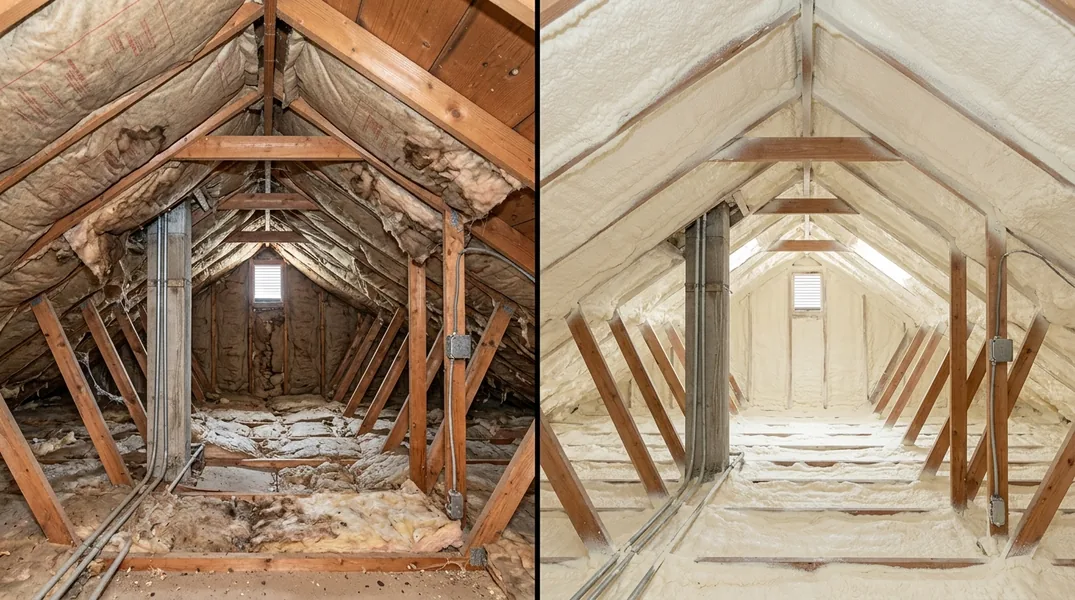
Why Historic Lafayette Homes Need Modern Insulation Solutions
The neighborhoods along Ninth Street Hill and Centennial in Lafayette are architectural treasures. Victorian and balloon-framed homes built in the late 1800s and early 1900s possess charm, character, and solid craftsmanship that modern construction often lacks. However, these beautiful older homes face a significant challenge: they were built long before modern insulation standards existed, and many homeowners struggle with uncomfortable temperature swings, high energy bills, and moisture problems as a result.
Balloon-framed construction, common in Lafayette's historic districts, creates a unique problem. Unlike modern platform framing where each floor is built independently, balloon frames run continuously from the foundation to the roof. This design allows air to move freely through wall cavities, making the home difficult to heat and cool efficiently. Add in original horsehair plaster, settling foundations, and deteriorating old insulation removal needs, and you have a recipe for energy waste and comfort issues. The good news is that modern spray foam and Wall & Injection Foam Insulation technologies can transform these homes without requiring invasive renovations that would damage their historic integrity.
The Problem with Aging Insulation in Victorian Homes
Many Victorian and balloon-framed homes in historic Lafayette neighborhoods were insulated with materials that simply don't perform by today's standards. If insulation exists at all, it's often mineral wool, fiberglass batts, or cellulose that has settled, compressed, or deteriorated over decades. Settled insulation loses its thermal resistance because the air pockets that provide the R-value collapse under their own weight. Moisture damage, pest intrusion, and mold growth further compromise these aging materials, creating both energy efficiency and indoor air quality concerns.
The challenge of old insulation removal in historic homes cannot be overstated. Removing deteriorated fiberglass or cellulose from attics and walls is labor-intensive and potentially hazardous, especially if the original insulation contains asbestos, a concern in homes built before the 1980s. Professional removal is essential, but it's also messy and disruptive. Once old insulation is safely removed, homeowners face the question of what to replace it with. This is where modern spray foam solutions shine, offering superior performance, air sealing, and the ability to reach irregular spaces that traditional batts cannot.
Attic Spray Foam Insulation Near Me: When to Call a Pro
If you own a Victorian or balloon-framed home in Lafayette, Attic Spray Foam Insulation is one of the most effective upgrades you can make. Spray foam expands to fill every gap, crack, and irregular cavity in your attic, creating a continuous thermal and air barrier that fiberglass batts simply cannot match. This air sealing is critical in older homes where settling, wood shrinkage, and foundation movement have created countless small openings that leak conditioned air year-round.
Closed Cell Spray Foam Insulation is particularly valuable in attics of historic homes because it provides both high R-value per inch and moisture resistance. This matters tremendously in Lafayette, where seasonal humidity changes can cause condensation problems in poorly insulated attics. Closed-cell foam creates a vapor barrier that prevents moisture from migrating into wall cavities and causing mold or structural damage. If your attic feels hot in summer or cold in winter, if you notice ice dams forming on your roof, or if your energy bills seem disproportionately high, it's time to contact Lafayette Spray Foam Insulation for a professional assessment. Call us at (765) 441-6823 to schedule a free estimate.
Wall & Injection Foam Insulation for Historic Wall Cavities
The walls of Victorian and balloon-framed homes present a particular challenge because they often cannot be easily opened without damaging plaster, lath, and original trim. This is where Wall & Injection Foam Insulation becomes invaluable. Injection foam technology allows contractors to access existing wall cavities through small, carefully placed holes that can be patched and finished to match the original wall surface. The foam is injected under pressure, expanding to fill the cavity completely and creating an air-tight thermal barrier without the need for invasive wall demolition.
For homes on Ninth Street Hill and other historic neighborhoods in Lafayette, injection foam insulation preserves architectural character while dramatically improving comfort and efficiency. The process takes a day or less, causes minimal disruption to your home, and the results are immediate. You'll notice warmer walls in winter, cooler walls in summer, and a significant reduction in drafts. Because the foam is injected into existing cavities, there's no risk of settling or compression over time, unlike traditional fiberglass batts. This permanence is especially important in historic homes where future renovations may be infrequent and you want your insulation investment to last for decades.
Understanding Open Cell Spray Foam Insulation vs. Closed Cell Options
Open Cell Spray Foam Insulation and closed-cell foam each have distinct advantages for different applications in historic homes. Open-cell foam is lighter, more flexible, and slightly less expensive than closed-cell. It provides excellent sound dampening and allows some moisture vapor to pass through, which can be beneficial in certain wall assemblies where vapor management is a design consideration. Open-cell foam typically has an R-value of 3.5 to 3.6 per inch, making it ideal for interior wall cavities where space is not constrained.
Closed-cell foam, by contrast, offers superior R-value (around 6 to 7 per inch), is moisture-resistant, and provides additional structural rigidity. In attics and exterior walls of historic homes, closed-cell foam is often the better choice because it prevents moisture intrusion and provides better long-term durability in environments prone to temperature and humidity fluctuations. The choice between the two depends on your specific application, your pricing budget, and your home's particular vulnerabilities. Lafayette Spray Foam Insulation can evaluate your Victorian or balloon-framed home and recommend the right foam type for each area, ensuring optimal performance and longevity.
Spray Foam Insulation Problems to Avoid and How Professional Installation Prevents Them
While spray foam insulation is highly effective when installed correctly, improper application can lead to spray foam insulation problems that compromise your home's performance. Common issues include inadequate expansion, poor adhesion to irregular surfaces, over-application that damages framing, and improper moisture management. In historic homes with uneven framing, settled foundations, and irregular cavities, these risks are amplified. DIY spray foam kits or inexperienced contractors may apply foam incorrectly, leading to voids, thermal bridging, and wasted material.
Professional installation by Lafayette Spray Foam Insulation eliminates these risks. Our team understands the unique structural characteristics of Victorian and balloon-framed homes in Lafayette, and we apply spray foam with precision and expertise. We prepare surfaces properly, control expansion rates, manage moisture barriers correctly, and ensure complete coverage without over-application. We also conduct post-installation inspections to verify that the foam has cured properly and is performing as intended. By choosing experienced professionals, you protect your investment and ensure that your historic home receives the quality insulation upgrade it deserves. Contact us at (765) 441-6823 or request a free estimate today to learn how we can transform your home's energy performance.
Looking for a professional spray foam insulation contractor in Lafayette? Lafayette Spray Foam Insulation responds fast for all your spray foam insulation needs.
Get a Free Quote