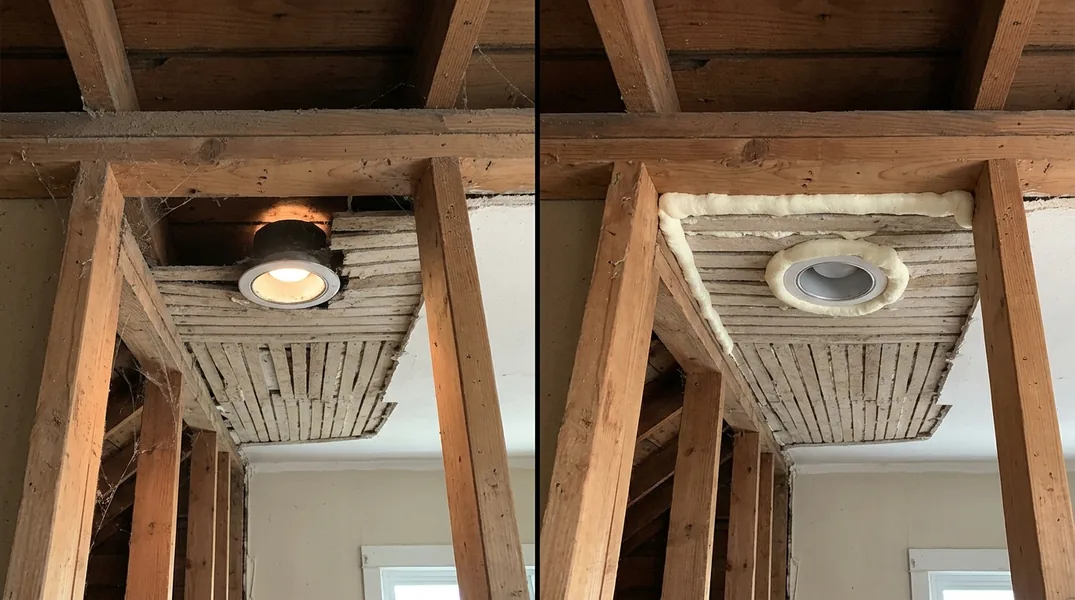
The Honest Conversation About Insulation Upgrades
When homeowners in Lafayette call about attic insulation, they often expect us to recommend a complete tear-out and replacement. But here's what sets Lafayette Spray Foam Insulation apart: we tell you the truth, even when it means suggesting a simpler solution.
Not every attic needs a full renovation. Sometimes your existing insulation just needs reinforcement. Sometimes a top-up of blown-in material is genuinely the best choice. And sometimes, yes, Attic Spray Foam Insulation is the right answer. The key is understanding your specific situation, your home's condition, and your budget before making an investment.
This guide walks you through the real differences between spray foam and blown-in insulation, when each makes sense, and why we sometimes recommend the simpler option even though it might not be our highest-ticket service.
Spray Foam vs Blown-In Insulation: The Core Differences
Spray foam and blown-in insulation serve the same purpose but work in fundamentally different ways. Understanding these differences is essential for making an informed decision about your attic.
Blown-in insulation (typically cellulose or fiberglass) is loose material that's pneumatically installed into wall cavities and attic spaces. It fills the space it occupies but doesn't create an air seal. Blown-in insulation has an R-value per inch that varies by material: cellulose typically offers R-3.2 to R-3.6 per inch, while fiberglass blown-in provides R-2.2 to R-2.7 per inch. The installation is relatively quick and non-invasive, making it an economical choice for many homeowners.
Closed Cell Spray Foam Insulation and Open Cell Spray Foam Insulation work differently. These materials are applied as a liquid that expands and hardens, creating both insulation and an air barrier simultaneously. Closed cell foam offers R-6 to R-7 per inch and provides excellent moisture resistance, while open cell foam delivers R-3.5 per inch but allows some vapor transmission. The application requires specialized equipment and trained technicians, which explains the higher cost but also the superior performance in many scenarios.
The real-world difference comes down to air sealing. Blown-in insulation insulates but doesn't stop air leaks. Spray foam does both, which means your HVAC system doesn't have to work as hard and your home stays more comfortable year-round.
Spray Foam vs Fiberglass: Performance in Lafayette Attics
Many homeowners wonder specifically about spray foam vs fiberglass because fiberglass batts have been the standard for decades. If your Lafayette home was built in the 1980s or 1990s, there's a good chance you have fiberglass batts in your attic right now.
Fiberglass batts are affordable and easy to install, which is why builders favor them. However, they have significant limitations. Batts only insulate the space they occupy; they don't seal air leaks around electrical outlets, ceiling penetrations, or the edges of your attic. Over time, fiberglass also settles and compresses, losing effectiveness. Moisture can also degrade fiberglass performance, and it provides no moisture barrier whatsoever.
Spray foam addresses all of these issues. It expands to fill every crack and crevice, creating a continuous thermal and air barrier. It doesn't settle, doesn't compress, and closed cell foam actively resists moisture penetration. If your current fiberglass insulation is old, settled, or your energy bills are climbing, spray foam typically delivers measurable improvements in comfort and efficiency.
However, the cost difference is real. Fiberglass blown-in might cost half what spray foam costs per square foot. If your fiberglass is in decent condition and you're just looking for a modest R-value boost, a blown-in top-up might be the smarter financial choice. That's the honest assessment we provide during a free estimate.
When a Simple Top-Up Makes Sense (And When It Doesn't)
Here's where the conversation gets practical. You don't always need the premium solution. A top-up of blown-in insulation makes sense if several conditions are true: your existing insulation is still in good condition (not moldy, not heavily compressed), your attic doesn't have significant air leaks around penetrations, your current R-value is close to but slightly below recommended levels, and you're looking to improve efficiency without a major investment.
In West Lafayette and surrounding areas, the recommended attic R-value is typically R-38 to R-49, depending on your heating and cooling loads. If you're at R-30 and want to reach R-38, adding 4 to 6 inches of blown-in cellulose might be the most cost-effective path. A top-up is also reasonable if you're selling your home soon and want to address an inspection issue without major expense.
However, a top-up is a poor choice if your attic has significant air leaks, moisture issues, or if you're planning to stay in your home for many years. It's also not ideal if your existing insulation is already compromised. In these cases, removing old material and installing spray foam creates a superior, longer-lasting result that will serve you better over a 20 to 30-year timeframe.
The honest answer requires a professional inspection. When you call Lafayette Spray Foam Insulation at (765) 441-6823 for a free estimate, we'll assess your specific attic and tell you whether a top-up, partial replacement, or full spray foam installation makes the most sense for your situation and budget.
Attic Spray Foam Insulation Cost in Lafayette: What to Budget
Cost is always a consideration, and it's important to understand the price range for different approaches. Blown-in insulation typically costs between $0.50 and $1.50 per square foot, making it the most economical option for a simple top-up. If your attic is 1,000 square feet and you're adding 4 inches, you might spend $500 to $1,500 total, including labor.
Spray foam insulation is more expensive, typically ranging from $1.50 to $3.50 per square foot depending on the type and thickness. A full spray foam application in a 1,000-square-foot attic might cost $1,500 to $3,500. That's a significant difference, but you're also getting superior air sealing, better long-term durability, and typically lower energy bills. Many homeowners find that the energy savings pay back the additional investment within 5 to 10 years, especially in older homes with poor air sealing.
Several factors affect pricing: attic size and shape, existing insulation type and condition, accessibility for installation, and whether you choose open cell or closed cell foam. Homes with complex roof lines or heavy existing insulation cost more to work with. The best way to understand your actual investment is to request a free estimate from Lafayette Spray Foam Insulation. We'll provide a detailed breakdown so you can compare options and make an informed decision.
Best Insulation for Attic: The Right Choice for Your Home
So what is the best insulation for your attic? The honest answer is: it depends on your specific circumstances, budget, timeline, and goals. There's no one-size-fits-all winner in the spray foam vs blown-in debate.
If you're looking for maximum performance, air sealing, moisture resistance, and long-term durability, spray foam is superior. It's the best choice for homes with significant air leakage, moisture concerns, or if you're planning a long-term investment in your property. If your energy bills are high and your home feels drafty even after heating or cooling, spray foam typically delivers the most noticeable improvement.
If you're managing a tight budget, your existing insulation is decent, and you just need a modest R-value increase, blown-in insulation is a practical choice. It's also the right answer if you're addressing a specific issue like an uninsulated section rather than upgrading your entire attic.
Wall & Injection Foam Insulation offers another option for specific applications, particularly in existing walls where traditional insulation is difficult to add. This targeted approach can solve localized comfort issues without a full-scale project.
The best insulation is the one that matches your needs and budget. Lafayette Spray Foam Insulation specializes in helping homeowners navigate this decision. We don't push the expensive option if it's not right for your situation. Call (765) 441-6823 today to schedule your assessment and get honest recommendations for your home.
Looking for a professional spray foam insulation contractor in Lafayette? Lafayette Spray Foam Insulation responds fast for all your spray foam insulation needs.
Get a Free Quote